
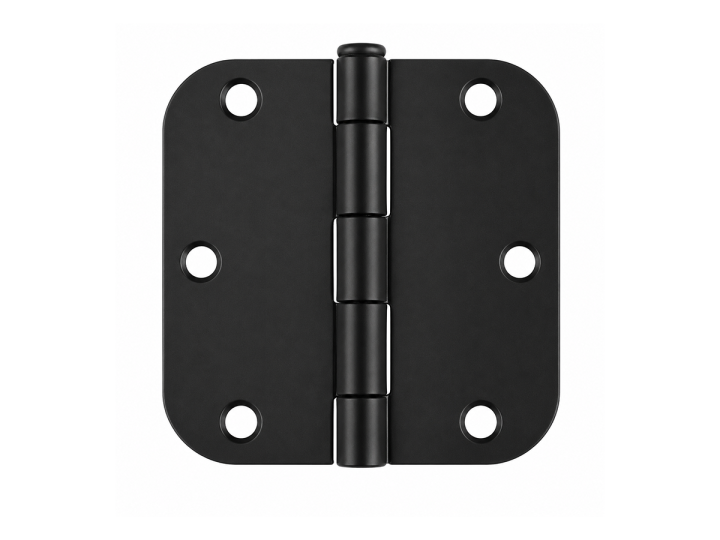
Hinges are the cheapest item on a door schedule and the one most likely to cause a callback. Four decisions cover it.
1. How many
Two hinges for a light interior door under about 900 mm high is theoretical; in practice use three for any standard interior leaf, and four for heavy, tall or exterior doors. The third hinge is placed near the top, where warping force is greatest — not in the middle, which is where it usually ends up.
2. Plain or ball bearing
Plain butt hinges are fine for interior doors that open a few times a day. Ball-bearing hinges — 2 BB or 4 BB — carry weight without wearing the knuckle and are worth specifying for any exterior door, any door with a closer, and any commercial corridor. The extra cost per door is small; the cost of a sagging door on site is not.
3. Square or radius corners
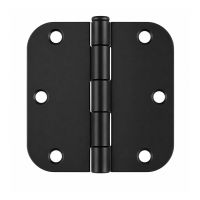
This is not a style choice on a retrofit — it must match the mortise already cut into the frame. 5/8 inch radius is the most common on machine-prepped doors; square corners appear on older or hand-cut frames. If you are replacing hinges, photograph the existing mortise before ordering. Getting this wrong means a chisel and a filler pot.
4. Size and material
3.5 inch (89 mm) covers standard residential leaves. Iron is the value option and takes finish well; SS 201 is the choice where humidity is a factor. Match the hinge finish to the door furniture — a satin nickel lever above a bright chrome hinge is a detail clients notice immediately.
When to use a concealed hinge
Flush-line interiors, hidden doors and joinery-integrated leaves, where the design calls for no visible hardware when the door is shut. Three-way adjustment lets an installer correct the reveal after the door is hung, which is exactly when it is needed. Confirm door thickness — our concealed range covers 32–44 mm.
Small detail, big difference
Non-rising pins. A rising pin lifts out and a door can be removed from the hinge side. On any door with an external face, specify non-rising.
Leave a Reply